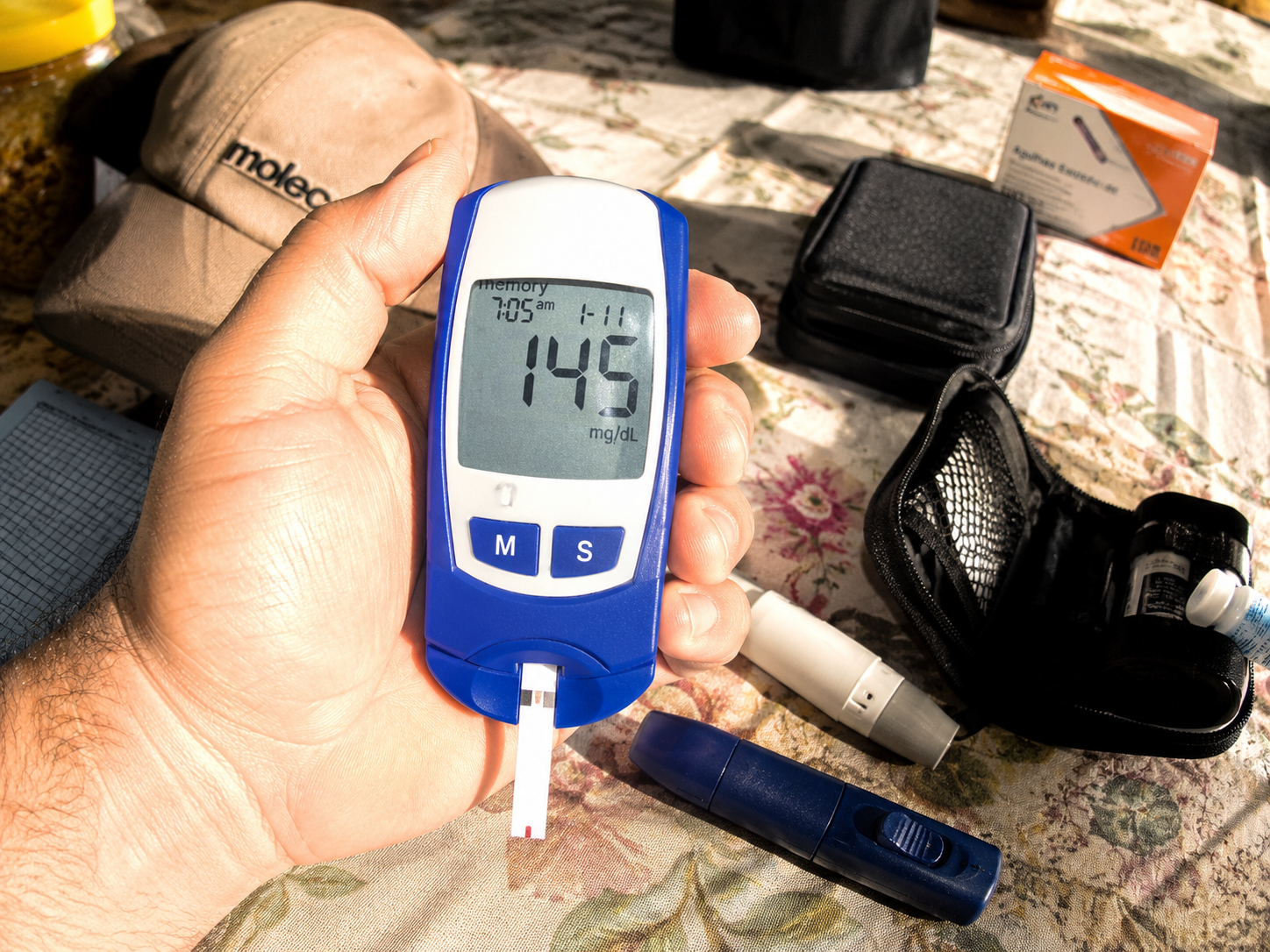
More than 37 million Americans currently live with type 2 diabetes — and another 96 million are considered pre-diabetic. If you've been told to cut carbs, walk 30 minutes a day, and take your metformin, you already know the standard playbook. But what happens when the standard playbook doesn't move the needle on your glucose meter?
The frustrating reality is that conventional advice works well for some people — and almost not at all for others. The reason, according to emerging research from Harvard, Munich University, and Stanford, may have less to do with willpower or diet than with a specific biological mechanism that standard treatments simply don't address.
In this evidence-based guide, we'll walk through the well-established natural methods for lowering blood sugar, and then explore the newer science that explains why those methods have limits — and what researchers now believe fills the gap.
The 5 Natural Methods That Are Widely Recommended
These approaches have solid clinical backing and are recommended by the American Diabetes Association, Mayo Clinic, and most endocrinologists as first-line lifestyle interventions.
1 Reduce Refined Carbohydrates
When you eat carbohydrates, your body converts them to glucose, which triggers insulin release. Refined carbs — white bread, pasta, sugar, sweetened beverages — cause rapid glucose spikes. Studies consistently show that reducing refined carb intake improves fasting blood sugar and A1C levels over time. Choosing complex carbohydrates like oats, legumes, and whole grains slows glucose absorption and reduces these spikes.
2 Exercise Regularly — Especially Resistance Training
Physical activity causes muscles to absorb glucose directly from the bloodstream for energy — temporarily bypassing the need for insulin. A 2022 meta-analysis in Diabetes Care found that resistance training (weights, bodyweight exercises) was particularly effective at improving long-term insulin sensitivity, with effects lasting up to 72 hours after a session. Combining aerobic exercise with resistance training produced the best results.
3 Prioritize Hydration
The kidneys filter excess glucose through urine — but only when adequately hydrated. Drinking sufficient water throughout the day supports this natural elimination process. Observational data suggests that people who drink more water have meaningfully lower risk of developing hyperglycemia over time.
4 Manage Stress and Sleep Quality
Cortisol — the primary stress hormone — directly raises blood glucose levels by triggering the liver to release stored sugar. Chronic stress and poor sleep create a persistent low-grade cortisol elevation that makes blood sugar harder to control regardless of diet. Studies show that even one night of poor sleep can increase insulin resistance by up to 25%.
5 Increase Dietary Fiber
Soluble fiber forms a gel in the gut that slows glucose absorption, blunting post-meal blood sugar spikes. The American Heart Association recommends 25–30 grams of fiber per day; most Americans consume less than half that. High-fiber foods include legumes, oats, flaxseed, chia seeds, apples, and most vegetables.
Why These Methods Don't Work for Everyone — And What Harvard Researchers Found
Here's the uncomfortable truth that most health articles don't address: millions of people follow all five of the above recommendations and still cannot normalize their blood sugar. They exercise. They cut carbs. They sleep well. And yet their morning glucose readings remain stubbornly elevated.
For years, this was attributed to patient "non-compliance" or genetic predisposition. But in 2019, a landmark Harvard University study offered a very different explanation — one that challenges the foundational assumptions behind most diabetes treatments.
Researchers measured insulin levels in 847 type 2 diabetics and compared them to healthy controls. The result was striking: diabetics had the same amount of insulin as healthy people — sometimes even more. The conclusion: the problem in type 2 diabetes is not a lack of insulin production. Something else is preventing insulin from doing its job.
This finding overturns the conventional model. If diabetics have sufficient insulin, why does sugar pile up in the blood? The answer, according to subsequent research from Munich University using Nobel Prize-winning microscopy technology, comes down to a single protein.
The Missing Protein: GLUT-4
Using a super-microscope capable of imaging molecules in real time — the same technology recognized by the 2014 Nobel Prize in Chemistry — scientists at Munich University examined insulin from both diabetic and healthy individuals. What they found was dramatic.
In healthy people, insulin was coated with an abundance of glowing green molecules. In diabetics, those molecules were nearly absent. And critically: the worse someone's diabetes, the fewer of these molecules remained.
Think of insulin as a delivery truck responsible for transporting sugar from the bloodstream into your cells. GLUT-4 is the fuel that powers those trucks. Without adequate GLUT-4, your insulin trucks are fully loaded — but going nowhere. Sugar accumulates in the blood not because there aren't enough trucks, but because the trucks have no fuel.
What causes GLUT-4 to disappear? A 2021 study from Oxford University identified a compelling culprit: the artificial preservatives, stabilizers, and chemical compounds found in ultraprocessed foods. These compounds — present in virtually every packaged food in America — are gradually absorbed and appear to neutralize GLUT-4 protein over time.
Natural Compounds With Documented Effects on Insulin Function
Beyond lifestyle changes, a growing body of clinical research points to specific natural compounds that may address the underlying mechanisms of blood sugar dysregulation — including the GLUT-4 pathway identified by Harvard and Munich researchers.
One of the most clinically studied natural compounds for blood sugar regulation. A 2022 Stanford Medical School study found that a specific combination of plant-based extracts produced significant improvements in fasting glucose levels — with results that surprised researchers in head-to-head comparison with standard pharmaceutical approaches. Mechanism: improves cellular insulin sensitivity and supports glucose uptake.
📖 Stanford Medical School, 2022A spice used in traditional medicine for centuries has been shown in multiple meta-analyses to support healthy glucose transporter function and reduce post-meal blood sugar spikes. Recent research confirms it works synergistically with other natural compounds, with effects that compound over time with consistent use.
📖 Journal of Diabetes Research, 2021A naturally occurring antioxidant with well-documented relevance to diabetic complications. A 2024 Harvard study following over 1,200 patients for 6 months found that daily supplementation with this compound produced significant relief from the burning, tingling, and numbness in extremities that affects nearly 50% of long-term diabetics — while also improving insulin sensitivity at the cellular level.
📖 Harvard Medical Study, 2024The "Holy Oil Trick": An Ancient Compound Now Validated by Research
Perhaps the most compelling — and least discussed — natural compound for blood sugar is oleocanthal, a bioactive polyphenol found specifically in high-quality extra virgin olive oil. This compound has been used medicinally for thousands of years, appearing in ancient texts and referenced in historical records of Mediterranean healing traditions.
Modern science is now explaining why. Researchers studying Mediterranean populations have long noted a paradox: southern Italian and Greek communities consume significant amounts of bread, pasta, and wine — foods conventionally considered problematic for blood sugar — and yet have 73% lower rates of type 2 diabetes than Americans with comparable diets. The key differentiator appears to be their daily consumption of high-oleocanthal olive oil.
Oleocanthal's mechanism of action is now better understood: it appears to protect and multiply GLUT-4 protein in insulin cells — directly addressing the deficiency identified in the Harvard and Munich research. Unlike general olive oil, oleocanthal concentration varies dramatically depending on olive variety, growing region, and extraction method. Only specific cultivars from limited Mediterranean and Japanese growing regions produce therapeutic concentrations.
Functional medicine practitioners refer to this approach as the "Holy Oil protocol" — combining oleocanthal-rich oil with complementary compounds in specific ratios to maximize GLUT-4 restoration. Early clinical data suggests meaningful reductions in fasting glucose within 4–8 weeks of consistent use.
Functional Medicine Physician Reveals the Exact Protocol Behind the Holy Oil Approach
Dr. Mark Heyman's free presentation walks through the full science behind GLUT-4 restoration, the specific ratios of oleocanthal and complementary compounds, and the clinical results from over 14,000 patients who have used this approach.
Watch the Free Presentation →No sign-up required · Available for a limited time
Frequently Asked Questions
From Our Community
Readers who have followed natural blood sugar protocols and shared their experiences with the Vitalis Health Review editorial team.
Thousands of Americans Are Using This Natural Protocol to Restore Healthy Blood Sugar
Dr. Heyman's complete research presentation explains the full science — the GLUT-4 mechanism, the Holy Oil protocol, and the clinical evidence behind this approach. Available free, no sign-up required.
Watch the Free Research Presentation →This presentation may be removed at any time · Watch now while it's available